If you’re reading this article, you’re probably preparing for a Ryanair cabin crew interview. Here’s the truth – speaking English and being enthusiastic aren’t enough. You’ll face written tests, behavioral questions, physical requirements verification, and attitude assessment that starts the moment you walk through the door.
The good news? I got in at 40 years old (yes, you read that right!). In this comprehensive guide, I’ll reveal what recruiters are looking for, which mistakes to avoid, and how to prepare effectively for the ASSESSMENT DAY.
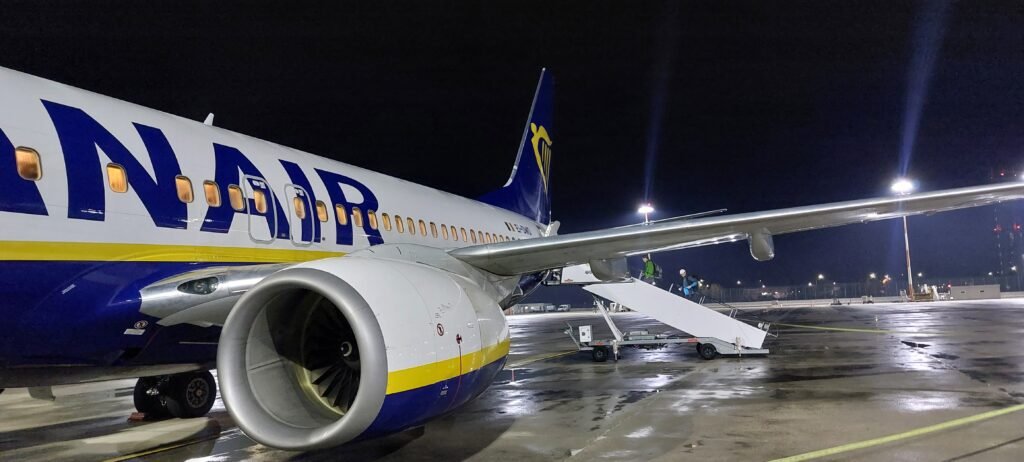
Who Is Ryanair?
Before you dive into the requirements, could we please understand the company you’re applying to? Ryanair is Europe’s largest low-cost airline, founded in 1984 and headquartered in Dublin, Ireland. The company operates:
- A fleet of over 500 Boeing 737 aircraft serving short-haul routes across Europe and North Africa
- More than 40 operational bases strategically located throughout Europe
- Over 3,000 daily flights connecting 225+ destinations in 40 countries
- Low-cost efficiency model: Quick turnarounds, point-to-point routes, and high aircraft utilization
Ryanair’s philosophy centers on operational efficiency, punctuality, and affordable air travel for millions of passengers annually. As cabin crew, you’ll be part of one of the most dynamic and fast-paced airline environments in Europe.
The airline’s rapid expansion means continuous recruitment of new cabin crew members, offering real opportunities for those ready to embrace the challenge of working in a demanding, performance-driven environment.
The Ryanair Selection Process
The Ryanair interview takes place during a single intensive day. It’s an immersive, intensive experience that tests you on multiple levels. Here’s what awaits you, phase by phase.
Phase 1: Company Presentation
The day begins with recruiters presenting the company, contractual conditions, the low-cost philosophy, and expectations for new cabin crew. They’ll discuss numbers, conditions, and operational realities.
What nobody tells you: Recruiters are already observing your body language, how you interact with other candidates, and whether you ask intelligent questions. The selection has already started before you enter the exam room.
Your objective:
- Listen actively (take notes!)
- Show genuine interest with head nods, a slight smile, and eye contact
- Confirm to yourself whether this environment is right for you
Phase 2: The English Test That Eliminates 30% of Candidates
After the presentation comes the written English test, which is not a Cambridge exam, but it’s not a walk in the park either. This mandatory written exam ensures you have the linguistic fluency necessary to communicate safely and professionally with passengers and international crew.
1. Grammar & Comprehension
What to expect: You’ll receive multiple-choice questions covering verb tenses, prepositions, and everyday vocabulary, including basic aviation terminology.
Level required: Solid B2 level. You don’t need to be a native speaker, but fluency and confidence are fundamental. Practice basic technical English to arrive prepared.
2. Short Written Text
What to expect: You’ll write a brief text (approximately 100-150 words) describing a real situation you might encounter on board and how you would resolve it.
My experience: They asked me to explain how I would present the menu to a passenger looking for a sandwich. I put down some lines explaining that I would show the entire menu to the client, and pushed more for the Menu Deals. Your focus should be on clarity, professional courtesy, and above all, effective problem resolution.
Mistakes to avoid in the Ryanair English test:
- Sentences that are too long and confusing
- Slang or informal language
- Not proofreading before submitting
Winning formula:
- Present the problem
- Show empathy
- Offer concrete solutions
- Maintain a positive and professional tone
Phase 3. Individual Interview Questions and What Recruiters Are Looking For
After passing the written test, you’re called for the individual interview. This can be one-on-one or in small groups, depending on the recruiter. Here, they evaluate not just what you say, but how you say it.
The 7 Most Frequent Questions With Answers Recruiters Want to Hear
1. "Why do you want to work for Ryanair?"
What the recruiter is really asking: “Have you done your homework? Do you know what you’re getting into? Are you motivated or just looking for any job?”
Wrong answer: “Because I love traveling and want to see the world.”
Right answer:
“Ryanair is Europe’s leading low-cost airline, with a constantly expanding fleet and an efficient operational model that I admire. I know the environment is dynamic and requires flexibility, but that’s exactly the challenge I’m looking for. I want to grow in a company that rewards performance and teamwork.”
2. "What are your main qualities for this role?"
Recruiters look for qualities like teamwork, resilience, problem-solving, customer orientation, and the ability to stay calm under pressure. The latter is significant.
Use the STAR technique (Situation, Task, Action, Result):
Example:
“My strength is managing pressure in fast-paced environments. When I worked as [reference your previous role], we once had an emergency with a very agitated customer during a peak period. I stayed calm, listened to their concerns, and found a solution that satisfied them, preventing the situation from escalating. The result? The customer left a positive review on the company website.”
3. "How would you handle a difficult or angry passenger?"
The hidden test: Measuring your empathy, de-escalation skills, and professionalism under stress.
The winning formula that worked for me was:
- Active listening: “First, I would carefully listen to their concerns.”
- Empathy: “I would acknowledge their frustration.”
- Solution: “I would seek a solution within company policy limits.”
- Escalation if necessary: “If I couldn’t resolve it, I would involve the senior cabin crew.”
- Safety always first: “If the situation threatened safety, I would immediately follow protocols.”
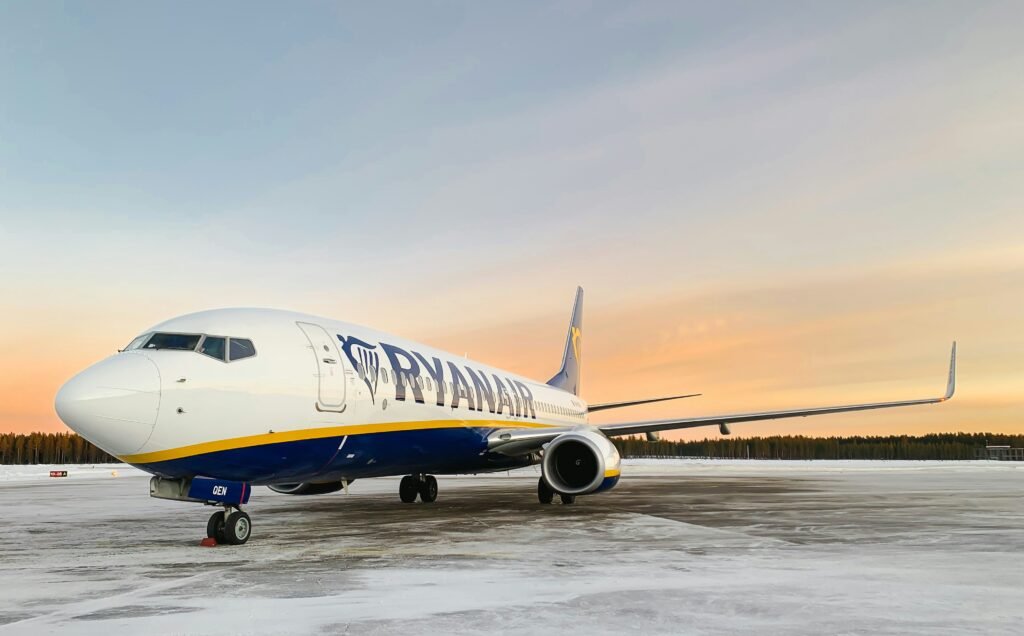
Mandatory Ryanair Physical Requirements
For becoming a flight attendant, physical requirements are essential for onboard safety and daily operations.
Height Requirements And Why They're So Specific
Minimum height for women – 157 centimeters (5’2”). This standard ensures you can safely reach the upper compartments of the Boeing 737 aircraft. During an emergency, you must be able to access safety equipment stored in overhead bins quickly.
Minimum height for men – 165 centimeters (5’5”). The justification is identical. It guarantees autonomous, safe access to all storage compartments and to emergency equipment positioned high up.
Maximum height – approximately 188 centimeters (6’2”). Exceeding this height creates significant ergonomic problems. The Boeing 737 cabin has restricted spaces and relatively low ceilings. Excessive height would make the rapid movements required during safety procedures and passenger service difficult.
Age Requirements for Ryanair Flight Attendants
Minimum age: 18 years completed
This is a mandatory legal and contractual requirement in all European countries where Ryanair operates. Under 18, it’s not possible to sign employment contracts of this type.
Maximum age: There’s absolutely no age limit. Look, I became a flight attendant at 40!
This is the news many need to hear – there is no maximum age limit at Ryanair. I personally know colleagues who joined at 42, 48, and even 52. What matters are physical fitness, attitude, and motivation, not the birth date on your passport.
Swimming Ability
Swimming: You must be able to swim at least 25 meters (82 feet). In case of an emergency water landing (ditching), every crew member must be able to swim to assist passengers during evacuation. The 25 meters represents the minimum standard of water competence necessary to handle water emergency scenarios. You don’t need to be an Olympic swimmer, but you must be confident in water.
General Physical Fitness
Good general health and physical endurance
There are no specific weight or body mass index requirements, but you must be able to:
- Stand for 6-8 hours consecutively
- Lift and move hand luggage up to 10 kg (22 lbs) repeatedly
- Move quickly in narrow and crowded spaces
- Handle emergencies with agility and promptness
- Work irregular shifts (including night flights) while maintaining alertness
The key is physical stamina; your body must sustain the daily operational demands of airline work.
Correctable Vision
Vision is correctable with glasses or contact lenses
Perfect natural vision isn’t required. I always wore glasses. You can wear glasses or contact lenses, as long as your corrected vision allows you to:
- Clearly read safety instructions and checklists
- Visually verify cabin integrity
- Identify potential dangers or anomalies
- Read digital displays and control panels
During training, you’ll undergo a medical check to confirm suitability.
Tattoos. The Forever Debate - Visible or Invisible?
Tattoos are not visible when wearing the uniform.
Ryanair maintains rigorous professional presentation standards. Tattoos are permitted but must be entirely covered by the standard uniform, which includes:
- Long-sleeved shirt/blouse (arm and forearm tattoos must be covered)
- Skirt/trousers (leg tattoos must be above the skirt line or covered by trousers)
- Closed collar (neck/décolletage tattoos aren’t permitted if visible)
If you have tattoos on your hands, fingers, face, or neck that cannot be covered by the uniform, unfortunately, they constitute an obstacle to hiring. Ryanair has introduced some flexibility in recent years, so I entered as a flight attendant with a wrist tattoo. They gave me a long-sleeved shirt. Game changer!
Piercings
Only discreet earrings, and only one per ear
Ryanair standards allow exclusively:
- One pair of small, discreet earrings (studs or thin hoops)
- One per ear (multiple earrings not permitted)
- No nose, eyebrow, tongue, or other visible facial piercings
This rule applies both during the interview and during service. Your appearance must be clean, neat, and compliant with company presentation standards.
You might think these requirements seem rigid, but they’re designed for your safety and that of passengers. If you meet all of them, you’re qualified to apply. Don’t let doubts about age or physical fitness hold you back. For example, if you can do a brisk 30-minute walk without getting breathless and swim in a pool, you’re probably already physically ready. The rest is mental attitude!
Physical fitness
Regarding physical fitness, there are no specific weight requirements, but you must be able to:
- Stand for hours
- Lift luggage (up to 10 kg)
- Move quickly in tight spaces
- Handle emergencies with agility

How to Dress for the Ryanair Interview
Here’s a somewhat brutal truth – recruiters evaluate you from the moment you enter. Precisely in the moment you step into the hotel lobby. Your appearance conveys professionalism before you even open your mouth.
Perfect Dress Code For Ryanair Interview (Complete Checklist)
Here’s a somewhat brutal truth – recruiters evaluate you from the moment you enter. Your appearance conveys professionalism before you even open your mouth.
For everyone:
- Dark suit (black or navy blue) – pantsuit/skirt suit for women, suit for men
- White long-sleeved shirt (impeccably ironed)
- Black closed-toe, polished shoes (3-5 cm medium heel for women, classic for men)
- Groomed appearance: neat hair (tied back for women), clean nails
- Discreet, professional makeup (for women)
- Groomed beard or clean-shaven (for men)
Absolutely avoid:
- Jeans, casual clothing
- Bright or overly creative colors
- Open-toe shoes, sneakers
- Overly strong perfume/aftershave
- Heavy or excessive makeup
- Flashy jewelry
- Visible tattoos
- Loose or messy hair
How to Prepare Effectively for Your Interview Success
Strategic preparation makes the difference between those who pass and those who get rejected.
Boost Your English
Concrete actions:
- Practice with online grammar tests (B2 level)
- Write 2-3 short paragraphs daily on aviation scenarios
- Watch cabin crew videos in English
- Practice conversations with native speakers (apps like Tandem or HelloTalk)
Focus on aviation vocabulary:
- Safety procedures, boarding, and emergency landing
- Customer service phrases
- In-flight service terminology
TIP: Contact me if you’re struggling with any of these points, and let’s see how I can help.
Master the STAR Method
I know this method could be new to you, but you’ll ace your interview if you pay attention to implementing it. Prepare 5-6 personal stories following the STAR technique to answer any behavioral question:
Preparation example:
- Situation: Describe a specific challenging context
- Task: What was your responsibility?
- Action: What concrete steps did you take?
- Result: What was the positive outcome?
In-Depth Research on Ryanair
Study these facts well (you’ll need them!):
- Number of Ryanair operational bases
- Fleet size
- Destinations served
- Company values and low-cost culture
- Recent company news
Pro Tip: Cite these facts in the interview. It shows you’ve done your homework and are genuinely interested in becoming a flight attendant.
Simulate the Interview Multiple Times
I recommend practicing in front of a mirror:
- Record yourself answering questions
- Analyze your body language
- Time your responses (1-2 minutes max)
- Practice natural smiling (yes, they can tell when it’s forced!)
Ready to Take Off
"30 Essential Questions and How to Answer Them"
It took me 5 years and plenty of mistakes to understand exactly what recruiters are looking for. I’ve put together the 30 questions and the proven answers that allowed me to finally pass my Assessment Day at 40.
After the Interview - The Training Course
For 2026, if you pass the interview, Ryanair offers the Training Course completely FREE.
Ryanair Training Course Details

Congratulations! You’ve passed the interview, and the offer arrived via email. The next step is the Training Course, the intensive period that will transform you into a certified flight attendant. This course is fundamental and rigorous, designed to prepare you to face every aspect of airline life, with particular emphasis on safety, as I mentioned before.
The course lasts six weeks and is entirely free! In the past, the cost could reach €3,000, but Ryanair eliminated this expense to attract new talent.
The program is extensive and covers – Safety Procedures, First Aid, high-level Customer Service, Emergency Protocols, and Aviation Regulations.
Exams – Prepare to take numerous theoretical and practical tests. Standards are very high, and attention to detail is paramount.
Accommodation – During the training period, the company does not provide accommodation.
Outcome – Completing the course guarantees you EASA certification (European Aviation Safety Agency), which officially qualifies you to operate as cabin crew.
Want Personalized Preparation?
The truth? In my time, there was no one to ask for help. I had to learn everything myself, making mistakes I could have avoided. You can choose a different path.
Here’s how I can help you:
- Realistic interview simulations
- Aviation English test corrections
- Preparation for Ryanair-specific questions
- CV and motivation letter analysis
- Body language and presentation coaching
👉 If you want guidance instead of guesswork, you can work with me here.
Tip
Don’t underestimate this period, because the 6 weeks are intense and test your endurance and learning capacity. But it’s the most important investment you’ll make for your future career, and it won’t cost you a euro! Study intensely, sleep well, and collaborate with colleagues. The dropout rate exists, but if you arrive prepared, you’ll make it!
A Message For You
Your dream of flying is within reach.
1. You’re never too old to start. I have colleagues who joined at 35, 42, and even 50. What matters is attitude.
2. Preparation beats talent. Some candidates were “born to fly” but showed up unprepared. Others, less natural but super prepared, shone brightly.
3. The interview measures your potential, not perfection. No one expects you to be an expert cabin crew member already. They’re looking for people who can become one.
4. Authenticity wins over scripts. Recruiters can spot rehearsed, fake answers immediately. Be genuine, be yourself, and let your real motivation shine through.
5. Resilience is everything. This job will challenge you physically, mentally, and emotionally. Could you show them you have the stamina and positive mindset to handle it?
FAQ
Base salary starts at approximately €1,800-2,200 per month, plus bonuses for flight hours, onboard sales, and per diem allowances. Total compensation can range from €2,500 to € 3,000 per month, depending on performance. It’s a job that rewards performance and efficiency.
Generally, 2-4 weeks for the response, then another 4-8 weeks until training begins (depending on course availability). The entire process from application to starting work typically takes 2-3 months.
Not always. During the interview, they’ll ask about your preferences, but the final assignment will depend on the company's needs. Be flexible with base location—it significantly increases your chances of being hired.
English is mandatory at the B2 level minimum. Other languages are a plus but not essential. However, speaking additional European languages (Spanish, German, Italian, and French) can give you a competitive advantage. It’s better to speak more than one language.
You can try again, but you’ll have to repeat the entire selection process from the beginning. The training has high standards, and approximately 10-15% of candidates don’t complete it successfully.
Ryanair does not typically provide free accommodation during the 6-week training course. Trainees are generally responsible for arranging and covering the cost of their own accommodation for the duration of the training period. It’s important to plan and consider these expenses before starting the course.
Expect irregular schedules with early morning starts (4-5 AM), late finishes, weekend work, and public holidays. You’ll typically work 5 days on, 3 days off, but this varies. Flexibility is essential for this role.
Yes, many Ryanair cabin crew members have families. However, you must have reliable childcare arrangements due to the irregular hours and potential overnight stays. The company doesn’t make exceptions to its scheduling policy for family commitments.
You can progress from cabin crew to senior cabin crew, then to cabin supervisor (purser), and eventually to cabin crew trainer or recruitment roles. Progression is based on performance, experience, and availability of positions.
Yes, very much so. You’ll be on your feet for 6-8 hours, lifting luggage, working in confined spaces, dealing with jet lag, and maintaining high energy levels throughout shifts. Physical stamina and good health are essential for long-term success in this role.
If you found this helpful, you might also enjoy:
Your first cabin crew payslip is unlikely to match what you imagined. You may already have an idea if you’ve had a payslip from a previous job. At the time of the Assessment Day, the recruiter quoted you a salary of €2,000. The bank app shows €1,540. Then next month, with the same job, it shows €1,820, and nobody warned you that some of what you earned wasn’t really your money to spend. And you know what? This is how the job works worldwide. Cabin crew compensation is one of the most misunderstood pay structures in any industry. It’s split into five to seven separate components, it changes every month with your roster, and the headline salary airlines advertise is rarely what hits your account. Below is exactly how cabin crew get paid – every euro, pound, dollar, or dirham, whether you fly for a European low-cost, a US legacy, a Gulf airline, or a regional charter. It doesn’t matter. Smiling cabin crew at the end of the duty Why Cabin Crew Pay Is Not Like Any Other Job Three structural realities make crew compensation fundamentally different from a 9-to-5 salary: 1. Pay has multiple components, not one – Base salary, flight pay, per diem, commission, premiums, bonuses, and non-cash benefits. I know it is complicated, but you need to understand each one separately to know what you’re actually earning. 2. Your roster determines your income. At the beginning, I had no idea what this meant. For example, a busy long-haul month and a quiet reserve month at the same airline can produce a 40% difference in take-home pay. The same job, the same airline, but surprisingly different paycheques. 3. Geography multiplies the complexity. A tax-free salary in the Gulf with free accommodation isn’t comparable to a higher gross figure in Europe, where high rent and income tax are a factor. The headline number lies in both directions. This is why the question of how much cabin crew make is? The question is likely impossible to answer in one sentence. It took me many months to fully understand all that. But I promise you, once you understand the building blocks, you can decode any contract, any payslip, and any airline’s offer in minutes. What Are the Building Blocks of Cabin Crew Pay? Before breaking down this complex topic, know that every airline assembles compensation from the same set of components, but in different proportions. Knowing what each one is and which airlines lean on which is the foundation of cabin crew financial literacy. Base salary or hourly rate This is the fixed component, paid every month regardless of how many flights you do, and it increases with seniority. In one month, you might only have standbys. In Europe, base salary is typically expressed as a monthly figure, so roughly €900-€1,800 gross for entry-level crew, depending on the country and airline. In the US, base pay is structured differently: you’re paid an hourly rate that applies only during block time (more on this below), with no fixed monthly minimum beyond a contractual guarantee of around 70-80 flight hours per month. The base alone rarely pays your rent, but it’s good to know that even if you don’t fly at all, airlines are obliged to pay it to you at the end of the month. During the Pandemic, for a short period, we were paid only to stay home, and it was a good thing because you weren’t running totally out of money. Flight pay with block time, sector pay, and duty pay There is a lot of confusion about this part of the salary. Know that it is the largest variable component, and it’s calculated in three main ways depending on where you fly: Block time pay (common in the US) – you’re paid by the hour, but the clock only runs from doors closed and brakes off (block out) to parked at the gate (block in). Boarding, deplaning, and ground delays are usually not paid at the same rate. Sector pay (common at European low-cost carriers) – a fixed amount per flight leg (sector) flown. Four-sector days pay more than two-sector days, regardless of how long each flight was. Duty pay (some charters and regionals) – you’re paid per duty hour, which includes time on the ground. This is rarer but better protects you against delays. Per diem or daily or hourly allowance A separate payment intended to cover meals and incidental expenses when you’re away from base. It’s usually paid per hour you’re away from base (US system) or per overnight/per duty day (European system). During my layovers, the per diem covered my meals and incidental expenses. Typical rates: €2 to €3.50 per hour in the US, or €30 to €80 per day in Europe, with higher rates for high-cost destinations. Regarding Gulf carriers, they pay layover allowances that vary significantly by city, reflecting fair compensation for different locations. Per diem is technically not salary – it’s expense reimbursement. In most countries, it’s tax-free within official limits, which can make it more valuable than the equivalent of gross pay. Since it’s meant for meals during trips, it’s important to budget it accordingly rather than as regular income. Commission and onboard sales A percentage of duty-free and buy-on-board revenue is shared among the operating crew. It’s typically 5-10% of total onboard sales. For example, at Ryanair, the duty-free commission is around 10% – not bad, isn’t it? This incentivizes the crew to get more involved in sales. Commission is a major source of income for European low-cost carriers. At Ryanair, easyJet, Wizz Air, and similar, motivated crew on the right routes can add €200- €600 per month from commission alone. Some of my colleagues – not me (lol) – sometimes got 400 euros per month from commissions alone, pushing perfume sales onboard. In contrast, at legacy carriers and Gulf carriers, commission is smaller or absent because their service models differ. Premiums and bonuses Additional pay for specific responsibilities or conditions:Read More »How Cabin Crew Get Paid on 2026
If 2025 was the year of industry recovery, 2026 is officially the year of the “Great Aviation Expansion.” We’ve already entered the first quarter of the year, and the aviation job market is experiencing phenomenal growth. We are witnessing an unprecedented recruitment wave, in my opinion, the strongest of the past decade, with airlines worldwide urgently searching for cabin crew ahead of a record-breaking summer season. Let’s say that the difficult years are behind us, and airlines are finally moving forward. After our recent deep dive into How to Become a Flight Attendant in 2026, it’s time to get practical and take a closer look at who is actually hiring right now. Look, from those fancy Middle Eastern airlines to the huge European low-cost carriers and major US airlines, they’re all desperately looking for people. Cabin crew walking through the airport 2026 is the Year of the “Great Aviation Expansion.” That said, the rules of the game have evolved. At the start of 2026, airlines are no longer looking only for a great smile. They are searching for “Next-Gen Cabin Crew”. They are looking for professionals who are tech-savvy, culturally aware, and ready to help build a more sustainable future for aviation. Yes, society is changing, and this is only the beginning. But with thousands of applications flooding recruitment portals every single week, how can you make sure your CV gets past AI-based screening systems? In this Q2 Hiring Round-Up, we go straight to the point. We analyse the latest recruitment timelines and insider updates to highlight the most promising opportunities available right now. If your goal is to be in uniform by spring, your journey starts here. Which Airlines Are Still Hiring Flight Attendants in Q2 2026? If you are reading this article in April or May 2026, we have great news – you are still in time. The recruitment wave that defined Q1 2026 is carrying straight into Q2, and in many ways, this is the most strategic moment to apply. Airlines are now in their final push to have new cabin crew fully trained and ready before the summer peak season kicks in. What does this mean for you? In practical terms, the urgency on their side is even higher than it was in January. Here is what is confirmed for Q2 2026: Ryanair has Assessment Days scheduled through April and May across Europe, including Stansted (27 April). Training remains fully funded, with a daily allowance throughout the 6-week course. Wizz Air is running Recruitment Days in London Luton (15 April), London Gatwick (30 April), Sofia (2 April), and Varna (16 April) Emirates continues its Open Day campaign — no invitation required at most events. Check the official Emirates Group Careers page for updated dates in your area. Qatar Airways CV Drop events are actively ongoing. If you haven’t applied yet, now is the time. Riyadh Air is accelerating its massive global recruitment drive as they prepare for its highly anticipated operational launch. Throughout Q2, they are hosting exclusive Global Cabin Crew Recruitment Events across multiple cities worldwide, including recent and upcoming stops in Barcelona, Belgrade, Athens, Baku, and São Paulo. Think about it this way: if your goal is to be in uniform for the summer season, you need to start your application this week — yes, right now as you read this. Airlines hiring today will begin training courses in April and May, putting you in the air by late June or July. Like so many things in this fast-moving era, the window is still open. But it’s closing faster than you think. Emirates – The Leader in Cabin Crew Recruitment for 2026 Emirates plane landing Emirates has officially launched one of its most ambitious recruitment campaigns ever for the first quarter of 2026. To support the arrival of its new Airbus A350 fleet, the Dubai-based airline is looking to hire thousands of new cabin crew members to join its truly multicultural team. In early 2026, Emirates is prioritising Open Day recruitment events. Why? They are the most accessible way to get hired. In many cases, no invitation is required. You can bring your CV. Emirates Cabin Crew Requirements – 2026 Minimum age: 21 years old at the time of joining Reach test: Ability to reach 212 cm on tiptoes to safely access emergency equipment Education: High school diploma (Grade 12 or equivalent) Languages: Fluent English (spoken and written). Multilingual candidates have a strong advantage in the 2026 selection process Grooming: No visible tattoos while wearing the Emirates cabin crew uniform (cosmetic coverings or makeup are not permitted). Emirates is particularly strict on this policy For the 2026 intake, Emirates has shifted its focus strongly towards Cultural Intelligence. What does it mean? With Dubai as your base and flights to over 150 destinations, recruiters carefully assess your ability to work with colleagues from more than 160 nationalities. While this is important across the industry, Emirates places particular emphasis on it. MY ADVICE: highlight any hospitality experience on your CV. Emirates is investing heavily in candidates with a strong service background. If you’ve worked in luxury hotels, premium retail, or customer service roles, make sure these soft skills are clearly visible, ideally near the top of your CV. Emirates Selection Process – 2026 Open Day / Online Application: Initial screening of your CV and grooming standards Group Assessment: Practical exercises to evaluate teamwork and problem-solving skills English test & reach test: Verification of technical requirements Final Interview: Often conducted using a hybrid model (in person or via high-definition video interview) Qatar Airways – The World’s Best Airline Is Hiring Good news – in 2026, Qatar Airways continues to dominate global rankings as “The World’s Best Airline.” The company consistently stands out for its exceptional service standards, strong focus on staff wellbeing, and, above all, outstanding passenger experience. Following the recent expansion of Hamad International Airport (DOH), Qatar Airways has entered a primary recruitment phase to staff its new Boeing 787 and 777-X aircraft. What makes Qatar Airways unique in 2026?Read More »Which airlines are hiring flight attendants for Q2 in 2026
Do you know what the most exciting thing happening in aviation right now is? An airline that didn’t even exist in 2022 is already hiring cabin crew worldwide, running recruitment events from Algiers to Colombo, and directly challenging Emirates and Qatar Airways on their own turf. I’m talking about Riyadh Air. And if you’re reading this, you’re probably already thinking about applying. As a former flight attendant and as an aviation career coach, I’ll be honest with you. Rarely in the history of commercial aviation has an opportunity like this appeared. A brand-new airline, backed by virtually unlimited state funding, building its crew from scratch, this is a once-in-a-generation moment. In this article, I’m breaking down everything you need to know about Riyadh Air cabin crew recruitment in 2026. What are the real requirements (no sugarcoating, lol), the salary figures, and the training? Also, we’ll talk about the mistakes that get candidates eliminated before they even get started. Riyadh Air Flight Attendants in front of the airplane Surprising Facts About Riyadh Air Nobody Talks About Before we dive into the recruitment process, let me share three things about this airline that literally blew my mind. Remember that understanding who Riyadh Air is will make your entire application stronger. It’s 100% owned by Saudi Arabia’s Public Investment Fund (PIF) – the same sovereign wealth fund that bought Newcastle United, is building Neom (the futuristic city in the desert), and has a budget that is, for all practical purposes, unlimited. Riyhad Air’s Aircrafts The first aircraft in the fleet is named Jamila, which means beautiful in Arabic. It’s a Boeing 787-9 Dreamliner that inaugurated the Riyadh-London Heathrow route in 2025 in a soft-launch phase (employees and families only) to test all systems before the full public launch in 2026. The fleet order is staggering: 60 Airbus A321neo, 25 Airbus A350-1000, and 39 Boeing 787-9. That means thousands of cabin crew positions will open over the next few years. The airline’s goal is to connect the Kingdom to over 100 destinations across 6 continents as part of Saudi Vision 2030, which aims to attract 150 million visitors per year to the country. Everything You Need to Know About Riyadh Air Cabin Crew Requirements The number one question I get asked every other day is: Carmen, can I actually make it through the selection? My answer is always the same, and I have written many articles on this. It depends on how prepared you are. So, here’s what this airline is really looking for. Physical Standards for Aspiring Riyadh Air Cabin Crew Minimum height: 160 cm, with an arm reach of 212 cm on tiptoes. You need to reach the overhead bins and safety equipment, so start practicing your stretch! No visible tattoos in uniform, no visible piercings. Every worldwide airline is strict on this requirement Swimming ability required with a flotation device. This is a safety requirement, not an excuse to eliminate you GACA Medical Examination: Once you clear the recruitment process, you’ll undergo a full medical check by the General Authority of Civil Aviation Education and Experience High school diploma as a minimum. It is the standard across Middle Eastern carriers Full fluency in English, spoken and written. It’s the airline’s working language, and additional languages are a significant advantage At least 1 year of experience in hospitality or a customer-facing role Ab Initio candidates welcome: No previous cabin crew experience? You can still apply if you can demonstrate what Riyadh Air calls Obsessive Hospitality (a natural vocation for service) Is 40 Too Old to Be Cabin Crew? I see this question everywhere online: Is 40 too old to be a cabin crew? Can I become a cabin crew at 40? What is the age limit for cabin crew in Riyadh? Let me say this clearly – there is no strict upper age limit at Riyadh Air. As I’ve already written in many other articles on this website, there is no age limit across the aviation industry, and Riyadh Air is no exception. In fact, the airline actively recruits professionals aged 40 and 41 for exactly the qualities that come with experience – emotional maturity, composure under pressure, and the ability to handle high-net-worth travelers with class. When you’re flying premium routes, and your passengers are executives and dignitaries, life experience is a competitive advantage, not a liability. So if you’re 41 and hesitating, stop hesitating – the dream of becoming a flight attendant is open to everyone serious about aviation. The Skills Riyadh Air Is Looking for in 2026 Clearing the basic requirements is just the entry ticket. Now, what actually separates candidates who get through from those who get eliminated are these three qualities: Digital Fluency – Riyadh Air was born digital – no paper in the cabin, AI concierge services, and advanced in-flight entertainment systems. If technology makes you nervous, start getting comfortable with it now. Cultural Intelligence – You’ll be working alongside colleagues from dozens of nationalities and serving passengers from every corner of the world. Genuine cross-cultural sensitivity can’t be faked in an interview room. Pioneer Mindset – Being among the first cabin crew of a brand-new airline means dealing with procedures that change, processes still being built, and constant evolution. If you thrive in dynamic environments, say so, loudly. 💡 Coach Tip Don’t just list these qualities on your CV or in your interview. Bring concrete examples. If you need help articulating your experience for Middle Eastern carriers, my Interview Guide with 30 Questions and How to Answer Them ebook is the result of 5 Assessment Days and the determination it takes to become a cabin crew member. 2. How the Riyadh Air Recruitment Process Works in 2026 Let me be straight with you, the Riyadh Air recruitment process is not quick. Candidates who have gone through it report timelines ranging from 3 to 6 months from application to onboarding date. If you’re looking for a job that starts next Monday, this isn’t it. But if you’re serious about building a career at one of the most excitingRead More »Riyadh Air Cabin Crew Recruitment in 2026