When I received the email saying “Congratulations, you have been selected. You’re invited to attend the Training Course in Wroclaw at…”, I was over the moon. After five years of trying, I could barely believe I was finally going to get my wings. There had been a point when I’d stopped believing in the dream, but I also knew I would never quit just because it was hard.

Do Flight Attendants Work Night Shifts?
The answer is a big YES, and more than most people realise. Flight attendants regularly work night shifts, especially on charter routes that operate at all hours. Wake-up calls at 11 PM, 2 AM alarms, and landings at dawn are completely normal. And you know? There is no fixed schedule, no “9 to 5.” The roster changes every month, and your body has to adapt constantly.
And if you’re wondering, do flight attendants get to go home every night? Not always.
In fact, depending on the airline, the route, and the roster, crew members may spend nights in hotels far from home, sometimes several times a week. This adds another layer of disruption to an already irregular sleep schedule. And what counts as a night shift? Any shift that significantly overlaps with the hours between midnight and 6 AM is generally considered a night shift, and aviation is full of them.
What Is the Circadian Rhythm and Why Does It Matter?
The circadian rhythm is your internal body clock that regulates the sleep-wake cycle, body temperature, and the production of hormones like melatonin and cortisol. It is essentially the master regulator of every biological function in your body. It is not a switch you can turn off by willpower. Years of night-shift work reprogram it deeply and systematically — and this applies not only to cabin crew but also to healthcare workers, security personnel, and anyone on rotating shifts.
My body kept sending stay-awake signals at 2, 3 AM because, for years, those hours had meant service carts, the ding-dong of call lights, and an entire cabin to manage. I was always on alert, always waiting for something to happen. I still set three alarms to make sure I’d wake up, even when I had nowhere to be. That’s life!
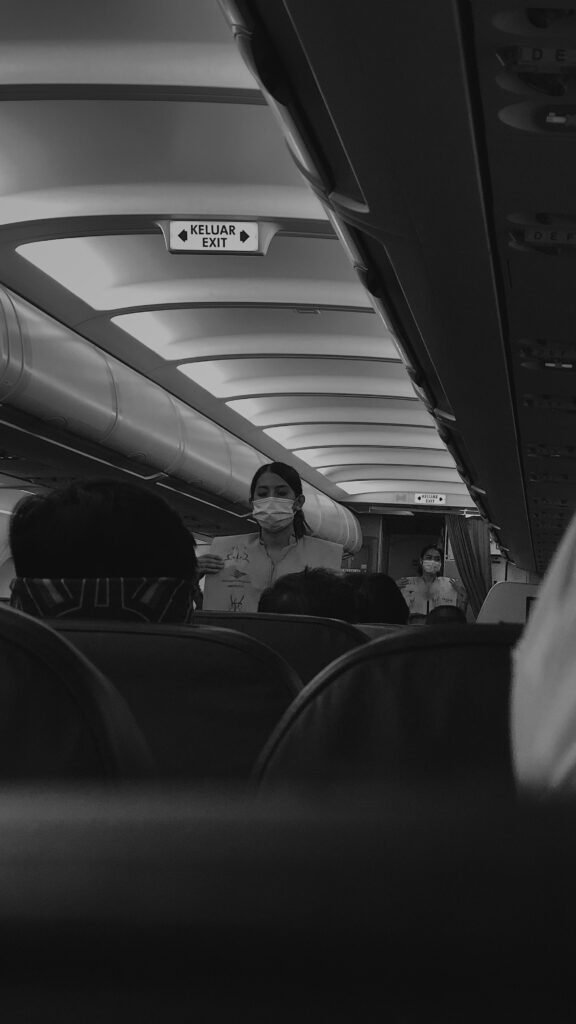
The Jet Lag Nobody Warns You About - The Anatomical One
When I stopped flying, the fatigue didn’t magically disappear. Paradoxically, sleeping normally felt impossible at the exact moment I finally had the freedom to do it.
I would fall asleep at 1 or 2 AM. Wake up at 5 feeling strangely alert, then completely crash at 2 in the afternoon. My appetite was totally off. My concentration was poor. This is what medicine calls social jet lag, a chronic misalignment between your internal biological clock and the rhythm of the outside world, without crossing a single time zone. My body didn’t know if it was night or day anymore. I had forgotten what it felt like to be well-rested, and I wouldn’t wish it on anyone.
When Your Gut Loses Track of Time Too
And here’s something many don’t talk about openly – chronic circadian disruption directly impacts the gut’s own biological clock, leading to irregular digestion, appetite dysregulation, and gastrointestinal discomfort. I experienced all of it.
Studies on shift work confirm that this misalignment is not in your head: body temperature rhythms and hormonal secretion patterns continue to follow old schedules even weeks after stopping night shifts.
Changing Jobs, Learning a Language, Knowing Aviation From Both Sides
Leaving my job as a flight attendant was not a defeat, but a conscious, deliberate choice to go higher – just in a different way.
I decided to stay in aviation by moving to the ground side and becoming a check-in agent. With that decision came an extra challenge – the French language. A language I didn’t know well, but that I tackled with the same determination I had put into my training exams. Today I speak it fluently, and I’m proud of it. With four languages – Romanian, English, Italian, and French – I can now reach far more people and help aspiring flight attendants and airport ground staff achieve their dream of taking their ”WINGS”.
This choice gave me something rare after my research – I know aviation from both sides. I know what life is like in the cabin and on the ground. And it is exactly this 360° vision that I now put at the service of those who want to enter this world, because I’m not just speaking as a former flight attendant, I’m speaking as someone who truly knows aviation, inside and out.

Three selection stages, one book for each
Video interview, group interview with role play, and final interview. Real questions, sample answers, and the mistakes that quietly end an application.
See the booksWant a plan built around your own application? Discover the coaching
How I Actually Recovered from Years of Night Shifts as a Flight Attendant
The recovery was not linear or quick, not at all as I had imagined. Here is what almost naturally made a difference:
- Natural light every morning within one hour of waking – even on cloudy days, because morning light is the primary synchroniser of the circadian rhythm
- Fixed wake-up time every single day, weekends included, no exceptions – this had an enormous impact on sleep quality
- Eliminating afternoon naps, even when exhaustion was almost unbearable – every nap was resetting the wrong clock
- Patience with myself — and this is perhaps the hardest part of all
What did not help was expecting a fast recovery. I practice, I keep thinking that next week I’ll be back to normal. That expectation turned every difficult night into a personal failure. The change happened slowly, and the morning I woke up before my alarm, genuinely rested, with daylight outside, felt almost surreal to me. I couldn’t believe it! It had taken months…

What You Can Do Today If You're Still Working Night Shifts
I’m not saying you need to quit your job to protect your sleep. You may have heard of the 3-5-7 rule for flight attendants – the FAA guideline that limits consecutive duty hours to manage fatigue. But knowing the rule and knowing what years of those duty hours do to your body are two very different things. The regulation protects you on paper; instead, your habits protect you in real life.
Some simple habits can make a real difference in the long run:
- Anchor your wake-up time on days off: a gap of more than 1.5 hours between work and free-day wake times significantly increases chronic fatigue
- Eat at consistent times, even when your roster complicates life: your digestive system has its own clock that responds to regular meals
- Limit blue artificial light in the hours before rest, especially after night duties
It’s a gentle discipline, and your body will hold on to the reference points you give it.
Do Flight Attendants Get to Sleep on Overnight Flights?
This is one of the most searched questions about the job, and the answer depends entirely on the aircraft and route. For example, on long-haul aircraft, cabin crew have dedicated rest areas called crew rest compartments (CRCs), typically located above or below the passenger cabin. You may also wonder how long flight attendants get to sleep on long-haul flights. Rest periods vary by airline and regulation, but typically range from 2 to 4 hours on ultra-long routes.
On short and medium-haul flights, including most charter night routes, there are no rest areas at all. The crew manages the entire flight without sleeping, which is exactly why the circadian impact of this job is so significant and so underestimated.
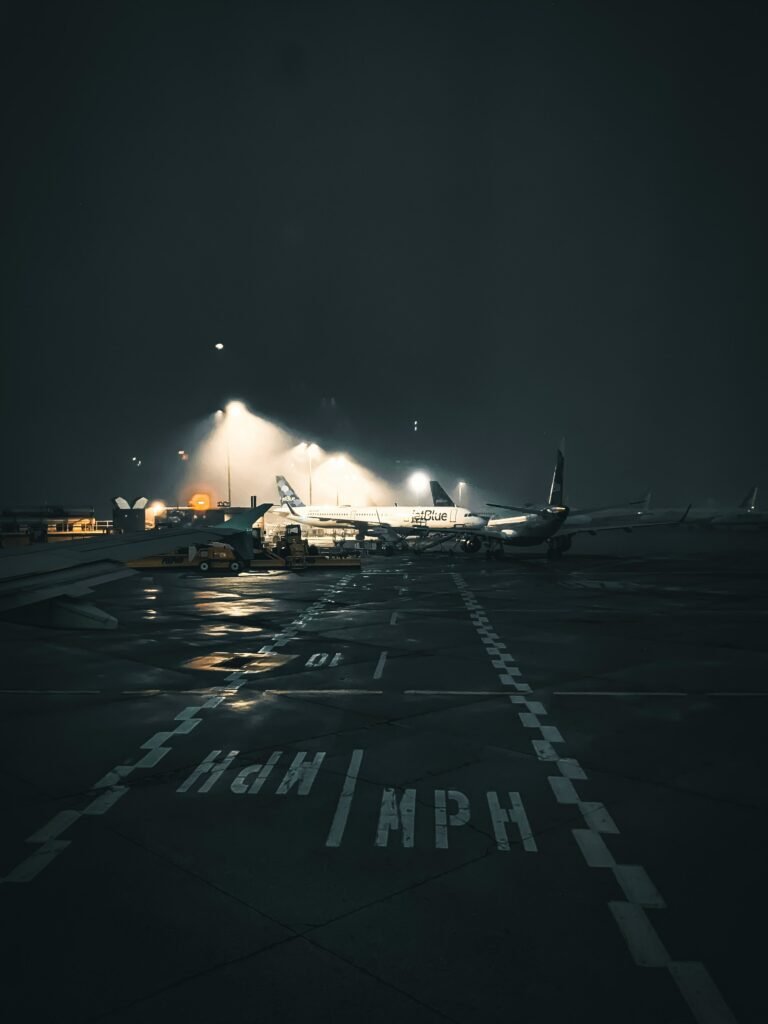
What You Need to Know Before Becoming a Flight Attendant
When you think about this career, these are not minor details, but the reality of the job.
Life as a flight attendant is wonderful. But it has a price, and that price is sleep. You will need to learn to fall asleep at 5 PM while the world outside is still wide awake. You will need to manage 11 PM alarms to make it to the airport on time, because you need an hour to get there, plus well over an hour before the flight for briefing, security checks, and boarding. The sooner you accept this reality, the better. I was not prepared for it at all.
Night shifts were tough. But they taught me resilience and discipline, and they completely changed the way I see things. I learned so much from passengers, from crew dynamics, and above all from myself. Because yes, our bodies and our sleep deserve their rightful place.
Always.
FAQ
Yes – often far longer than expected. The circadian rhythm becomes deeply reprogrammed over years of night-shift work, and the body can take 6 months to a year to reach a stable equilibrium, even after completely stopping shift work.
Social jet lag is the chronic misalignment between your internal biological clock and your external life schedule. It is extremely common among flight attendants because irregular shifts, especially night flights and charter routes, continuously disrupt the sleep-wake cycle, regardless of the time zones crossed.
Morning natural light exposure within the first hour of waking, a fixed wake-up time every day (weekends included), and eliminating afternoon naps are the most effective evidence-based strategies. The process requires consistency and patience – there is no shortcut.
Difficulty falling asleep at normal hours, early waking with unexplained alertness, afternoon energy crashes, disrupted appetite, digestive issues, and poor concentration are all typical. These are signs that the body is trying to readjust its biological clock.
The 3-5-7 rule refers to FAA and EASA fatigue regulations that set limits on consecutive duty hours and mandatory rest periods. However, even within legal limits, the cumulative effect of years of night rotations on the circadian rhythm goes well beyond what a single night’s rest can fix.
Not always. Depending on the airline, route type, and roster structure, flight attendants frequently spend nights in hotels away from home – sometimes multiple times per week. This layover pattern adds a significant extra layer of sleep disruption on top of the already irregular shift schedule
On long-haul routes, yes. Crew rest compartments allow for 2 to 4 hours of rest. On short- and medium-haul night flights, there are typically no rest facilities, so the crew operates the entire flight without sleep.
Irregular sleep is not a side effect of the job, but it is the job. Learning to sleep on demand, managing early wake-ups and late-night arrivals, and protecting sleep hygiene on days off are practical life skills that directly impact your performance, well-being, and long-term career in aviation.
If you enjoyed this article, you might also like:
If you’ve spent hours scrolling through forums or Facebook groups and other social media, you’ve probably noticed that answers to questions about what level of English is required for Assessment Day, and for working as a flight attendant, are often disparate and contradictory. Every day, I receive messages on Instagram from confused aspiring cabin crew. Some say you need a university degree, others think school-level English is enough, and many don’t have a clear understanding of the difference between various levels. The truth is, there isn’t much structured material out there on this topic. In this article, I’ll use my experience in both sectors, flying and check-in, to give you the definitive roadmap. First day on the job as a flight attendant 1. The English Level Required to Become a Flight Attendant One of the questions that most often comes up in my Instagram messages is about the level of English required to work as a flight attendant. I notice a prevailing confusion because people often mix theoretical school knowledge with the practical realities of the cabin or the airport. What surprises me most is that airlines around the world ask for different levels, even though the English used in the aviation sector is universal. Why is A2 Level Not Sufficient? Many aspiring candidates wonder if an A2 level of English is sufficient to start this career. Analyzing the reality I’ve encountered at the airport, the answer is unfortunately no. At an A2 level, a person can understand everyday expressions and handle very simple exchanges, but aviation requires far superior communication. Imagine having to explain evacuation procedures or manage a passenger with a medical emergency. In these cases, the A2 language barrier would become a safety risk. And as I say in almost every article, safety is the mantra of the aviation sector. For this reason, international airlines almost immediately discard profiles that don’t demonstrate at least intermediate fluency. B1 vs B2 Certification What’s the Difference? Another hot topic concerns the difference between B1 and B2 English certification. While B1 level (Intermediate) allows you to describe experiences, dreams, and hopes, B2 level (Upper Intermediate) is what airlines truly define as “good.” If you’re wondering whether the B2 level is good for working as a flight attendant, the answer is yes. In practice, it’s the threshold level that allows you to sustain an entire Assessment Day without struggling. However, it’s crucial to understand that airlines often don’t care about a piece of paper from a specific school. What matters is your ability to sustain a professional conversation under stress, not the certification itself. By the way, most airlines don’t require language certification. If you apply to a large national airline, you may need to provide documentation certifying your level. What Level of English Do You Need to Work at an Airport? We shouldn’t forget those who want to start from the bottom. For ground roles, such as check-in agent, requirements can be slightly more flexible than for flying, but a solid B1 foundation is still necessary. In my case, I started my career at the highest level as a flight attendant at 40, then “came down to earth” as a check-in agent. The level required to work at the airport is much lower and, consequently, easier to achieve. I find that working at an airport is the best way to learn technical English – such as terms related to baggage, visas, and delays – before leaping into the flight attendant role. Airport Acronyms and Codes By the way, anyone who has worked on the ground knows that airport English is made up of precise acronyms and codes. Bringing this precision to your flight attendant interview shows that you’re not a beginner, but a professional who already knows what it means to work in the sector. Let’s put your skills to the test together before the big day However, there is a massive difference between knowing the terminology and using it naturally under pressure. I’ve seen countless candidates write Fluent on their CV, only to freeze at the worst possible moment during the Assessment Day. The truth is, reading these phrases is just the first step. Saying them out loud, while looking a recruiter straight in the eye, is a whole different story. That is exactly why I created my 1-on-1 coaching program – a space dedicated exclusively to turning your theoretical knowledge into practical skills. Together, we will work intensively on: Role Play Simulation – You will learn how to handle difficult passengers using the correct technical terms, exactly as you will be expected to do at the Assessment Day. Pronunciation and Natural Flow – I will make sure you answer with confidence, rather than just reciting from memory. Your Safe Space – These sessions are designed to help you make mistakes, get corrected, and arrive at your selection day feeling fully self-assured. I’ve already helped dozens of candidates just like you overcome their language fears and finally earn their wings. Want a practice run before the real takeoff? 👉 Book your simulation session here. 2. Educational Path and Requirements Another major question concerns what you need to study to become a flight attendant. Many young people, and not-so-young ones, are convinced that you need years of university or extremely expensive specialized schools, but the reality is much more accessible if you know where to look. What Education Do You Actually Need to Become a Flight Attendant? When I receive messages from aspiring cabin crew in Brazil, the Philippines, South Africa, or the US, the fear is almost always the same – the fear of needing a university degree or an expensive aviation school to get hired. The short and honest answer is no. While regulations vary slightly across the globe, the universal baseline academic requirement is simply a High School Diploma (or its equivalent, like a GED in the United States). There is no mandatory “flight attendant high school” anywhere in the world. That’s good news! What truly mattersRead More »What English Level Do You Need to Be a Flight Attendant?
There’s quite a bit of confusion about flight attendant roster planning, and in this article, I would like to shed some light on this topic. I want you to know that my experience will guide you. When I received my first roster after completing the Ryanair Training Course, it was the most amazing feeling of my life! It was like I had become… That’s why I can freely tell you that the day you receive your first Roster will be an unforgettable moment. However, I must warn you that the first time you open it, it feels like looking at the Matrix. Codes, airport identifiers, incomprehensible times… You won’t understand much despite the intensive study days you’ve just completed. Plus, you’ll wonder if you’ll ever have any social life with such a packed schedule. Flight attendant reviewing her duty Roster What is a cabin crew roster? If you’ve never heard this word, don’t worry, because a Roster is your monthly crew schedule. In the wonderful world of aviation, this document is sacred and will be your guide, your compass that decides where you’ll sleep, when you’ll see your friends, and how much you’ll earn. Anatomy of a cabin crew roster Many people think a roster is simply a list of flights. In reality, it’s a perfect engineering of three fundamental elements you need to know how to read to avoid being exhausted by the end of the month: 1. Report time vs departure time On your roster, you’ll often see the “Report” time (e.g., 05:00) and the “Departure” time (e.g., 06:00). That time gap is your briefing period. Be aware that in many airlines, your hourly pay only starts when the aircraft moves (block-to-block time). Understanding this helps you figure out why your paycheck sometimes seems “lighter” even though you’ve been away from home for 12 hours. At the beginning, I was super confused about that! But wait, don’t worry, because during training, you’ll receive all the instructions to clear up any doubts. 2. Zulu time (UTC) Aviation never sleeps and doesn’t change time zones. Your roster will almost certainly be in UTC (Coordinated Universal Time). If you don’t learn how to convert it to your local time right away, you risk showing up to the briefing three hours early or late! As an anecdote, on my very first day working as a supernumerary, my colleague, who was supposed to fly with me, called from the airport to ask where I was because she was waiting for me. And me? I was sleeping even though it was 5 AM, and I should have already been in uniform, starting my duty. I hadn’t calculated the roster correctly. 3. Positioning (deadheading) Sometimes you’ll see flights on your roster where you’re listed as a passenger. This is called deadheading, positioning, or DHD. It sounds like an odd term, but it simply means the airline is moving you to another city because your service is needed there. It’s a great time to study or rest, but it still counts toward your “Duty Time.” I admit it’s a moment many cabin crew colleagues look forward to with joy. Flight attendant traveling off duty Managing fatigue – minimum rest requirements When you first start flying, and even after a few weeks, you’ll think the roster is designed to accommodate your social commitments. The truth is that this flight schedule planning takes into account only your safety, the safety of passengers, and the safety of the entire crew. There’s a concept called Minimum Rest (or FDP – Flight Duty Period limits). For example, if you land at 2 AM after an exhausting shift, the airline is legally required not to have you back on an aircraft before a certain number of hours (usually 10-12, depending on EASA regulations in Europe or FAA regulations in the US). For example, as a ground staff member, you won’t have this type of issue. For those who don’t know me, I’m also certified as ground handling staff, and the hours are more relaxed – you’ll work, with few exceptions, always 8 hours a day. But when it comes to flight time, the rules are very strict. Fun Fact Often, the minimum rest away from base (during a layover) is shorter than at your home base. This means that in a hotel in New York, you might only have 10 hours to sleep, eat, and get ready again. Knowing how to manage sleep during these windows is what distinguishes a professional from a beginner. The work-life balance reality I can say it out loud – work is important, but private life matters more. Many aspiring flight attendants fear that the roster is a prison, but the reality is exactly the opposite. If you learn to manage it, you’ll discover that your social life will become, from a quality perspective, superior to that of those who work in an office. While your friends are stuck in Monday morning traffic, you could be enjoying a coffee downtown in total relaxation. Having a leisurely breakfast or going to the gym when there’s no one there is the real sweet life. It’s called off-peak living. What are the shifts for cabin crew? Regarding weekend management, one thing is true – you won’t have every weekend off. But when you do have those 3 or 4 consecutive days off (the so-called Days Off), you can organize mini-vacations or spend time with family without asking anyone’s permission. Another rule you can take advantage of during your flight attendant life is the swap (shift exchange). What is it? For example, if you have your best friend’s birthday, you’ll start hunting for a colleague who might swap their workday with you! The shift exchange system is your lifeline. This is where your negotiation skills become fundamentally important. Three selection stages, one book for each Video interview, group interview with role play, and final interview. Real questions, sample answers, and the mistakes that quietly end an application. See theRead More »Cabin Crew Roster Guide – How It Works (Complete Guide 2026)
Many believe that a dazzling smile, fluent English, and a polished appearance are all it takes to ace the Assessment Day and finally earn your wings. But here is a confession – I thought the same thing when I first decided to become a Flight Attendant. And that single misconception is precisely what sent me home empty-handed… more than once. If you are reading this, chances are you have already submitted your application, or you are obsessively checking your inbox every five minutes waiting for that life-changing invitation. I know that feeling all too well. Beyond the excitement and adrenaline, a thousand questions are racing through your mind. You are likely already visualizing yourself in that crisp uniform, pulling your crew trolley through the airport terminal. However, there is a harsh truth that isn’t discussed enough. The vast majority of candidates get cut specifically during the Cabin Crew Group Interview, often walking away without ever knowing why they didn’t make the grade. What No One Tells You About the Assessment Day The Assessment Day is not just a standard job interview. It is a behavioral test meticulously designed by aviation experts and psychologists to observe exactly how you react under pressure. If you walk into that room without knowing what they are actually measuring, you are playing a game without knowing the rules. From my online research and the dozens of emails I receive, the same issue always arises: there is a lack of clear procedure regarding what really happens behind closed doors. The web is flooded with conflicting information about the Cabin Crew Group Interview, which only creates more confusion. Why is the Cabin Crew Group Interview So Intimidating? Countless candidates describe the airline group task as the most daunting part of the entire Assessment Day. Not because it is technically “difficult,” but because it is unpredictable. Those who have faced it describe the feeling of walking into a room where everyone else seems more confident, more extroverted, and better prepared. Some fear talking too much, while others are terrified of saying too little. Many freeze up because they don’t know whether to take the lead or step back to let others shine. There is the constant feeling of being watched in every gesture, even when you are silent. Many candidates leave convinced they nailed it, only to be rejected without explanation. Others pass despite feeling like they barely spoke a word. The common thread in these shared experiences is that the difficulty doesn’t lie in the exercise itself, but in not knowing what is being evaluated. Most candidates arrive perfectly prepared regarding their outfit and CV, but completely unprepared for the psychological and relational dynamics that determine the selection. It is precisely this lack of clarity that generates anxiety, confusion, and the feeling of having zero control over the situation. Here are the 5 common mistakes you can avoid: 1. The “Shark” Trap in the Group Task You are sitting in a circle for the Cabin Crew Group Interview. You are assigned a task (like the NASA Test, the Desert Island scenario, or another problem-solving exercise). Thirty seconds in, there is always that one person who takes control, talks over everyone else, and tries to make decisions for the entire team. Systematically, there is always one. In the recruitment world, we call this person “The Shark”. The Most Common Mistake. Most candidates react in two equally damaging ways: They shut down and stop speaking, becoming invisible (The “Ghost”). They try to compete by raising their voice to overpower the Shark. Both behaviors get you penalized. Once you are escorted out, nobody understands what the fatal error was. What do Recruiters actually want to see? Recruiters are not looking for a boss who commands, never! They are looking for Crew Resource Management (CRM) skills, like collaboration and calm leadership. There are specific, polite, yet firm phrases (the “scripts”) that allow you to neutralize the Shark, include the quiet members of the group, and emerge as the balancing force. These are small details, but they make a massive difference in your final score. 2. The Interview Starts Before You Enter the Room (The 6-Second Rule) I vividly remember the 5 times I attended an Assessment Day, and I saw it all. From candidates showing up at a five-star hotel with inappropriate attire and messy hair, to people so shy they wouldn’t react to any stimulus. Many believe the evaluation begins when you officially introduce yourself, but in reality, it starts the exact moment you step onto the premises (or even in the parking lot). Remember, recruiters are constantly profiling you: How you sit (your posture). How do you wait? How you interact (or ignore) other candidates. There is a non-verbal mistake I see all the time that screams boredom, insecurity, or disinterest: using your phone. And no, it’s not just about smiling. It’s about how you occupy space, how you carry yourself, and your overall grooming and presence before you even utter your name. 3. Panic During the Individual Role Play You survived the group task. Now you enter the room for the one-on-one interview. Suddenly, the recruiter flips a switch and transforms into an angry, aggressive, or even rude passenger. In this phase, they are not testing your English grammar; they are testing your emotional stability. If you apologize too much, you look insecure. If you quote the rules (“It is forbidden”), you seem rigid. If you react impulsively, you are out. What works is having a clear mental framework to follow, even when your adrenaline spikes. Dealing with a difficult situation isn’t a walk in the park, but without a strategy, it is incredibly easy to get flustered. 4. Logic Tests – The Fear of Math Currency conversions, time zones, visual logic. Many candidates walk in already terrified just at the thought of this test, whispering to their neighbor, “I am terrible at math.” But here is the truth: these psychometric and aptitude tests aren’t designed toRead More »Cabin Crew Group Interview – 5 Common Mistakes